
Comorbid Insomnia — Causes & Treatment
What is Co-Morbid Insomnia?
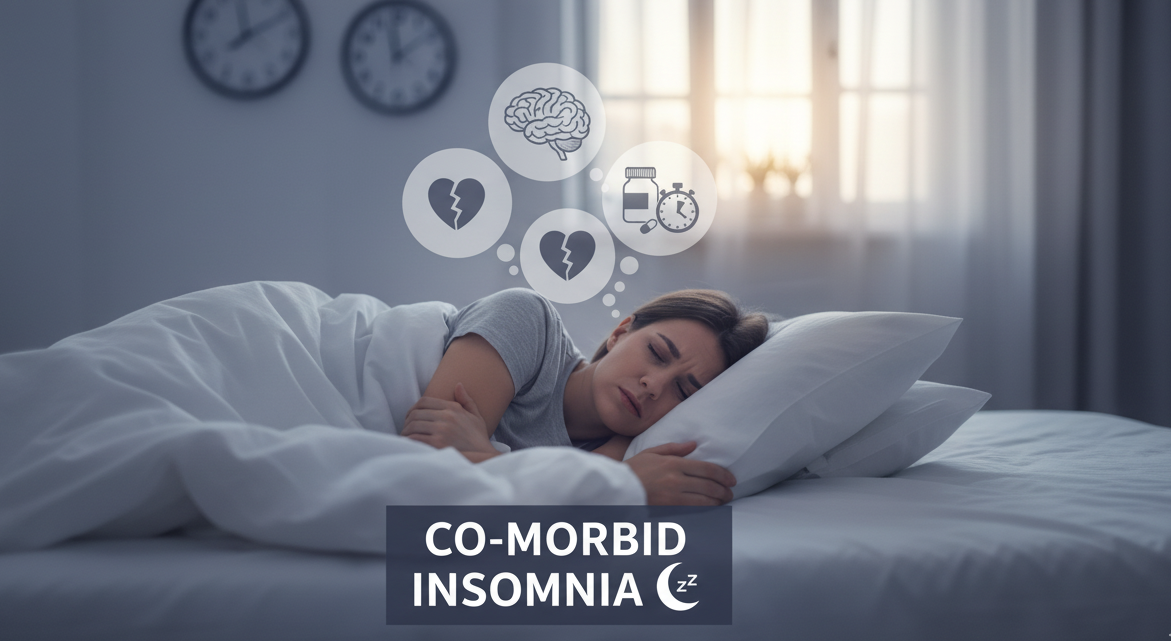
If you’ve been told you have “comorbid insomnia” (or a loved one has), that phrase can feel confusing and worrying. This short guide explains the term in plain language, what comorbid insomnia often looks like, why it happens, and what can be done to treat it.
What does “comorbid” mean?
“Comorbid” means two or more conditions are happening at the same time. When it comes to sleep, comorbid insomnia is insomnia that occurs alongside another health issue — such as anxiety, depression, chronic pain, ADHD, or a medical condition. It doesn’t mean one condition caused the other; rather, they’re connected and can make each other worse.
How does comorbid insomnia feel?
People with comorbid insomnia usually describe one or more of the following:
- Trouble falling asleep (it takes a long time to drift off)
- Waking up during the night and struggling to get back to sleep
- Waking much earlier than you want to (early morning awakening)
- Waking up and not feeling rested, even after long sleep
- Daytime tiredness, low energy, trouble concentrating, or mood changes
If the other condition (for example, anxiety or chronic pain) came first or makes sleep much worse, the insomnia is often called comorbid.
Common conditions that occur with insomnia
- Anxiety disorders (worrying at night, racing thoughts)
- Depression (early waking, low motivation, changes in sleep pattern)
- Chronic pain (discomfort that wakes you up)
- PTSD or trauma-related distress (nightmares, hypervigilance)
- ADHD (restlessness, trouble winding down)
- Medical conditions or medication side effects (like thyroid problems, diabetes, or drugs that disrupt sleep)
These conditions don’t always cause insomnia directly — but they interact with sleep in ways that can create a persistent sleep problem.
Why do they happen together?
Sleep and health are tightly linked. There’s a two-way relationship:
- Poor sleep makes mental and physical health worse — fatigue can increase pain, low mood, or anxiety.
- Mental or medical symptoms (racing thoughts, pain, medication side effects) disrupt sleep.
Over time, the way people react to sleep loss — such as worrying about sleep, napping more during the day, or spending extra time in bed — can make insomnia worse and keep it going even after the original problem improves.
How is comorbid insomnia different from primary insomnia?
Primary insomnia happens on its own without another health condition causing or contributing to it. Comorbid insomnia occurs together with another condition (mental, medical, or both). That difference matters because comorbid insomnia often needs a coordinated treatment plan that addresses both the sleep problem and the other condition together.
How is comorbid insomnia treated?
The treatment approach that works best is usually an integrated one. This often includes:
- Cognitive Behavioral Therapy for Insomnia (CBT-I): an evidence-based, non-drug treatment that focuses on changing sleep habits and unhelpful thoughts about sleep. Core components include sleep scheduling (sleep restriction), stimulus control (making the bedroom a place for sleep), relaxation, and cognitive strategies for worry.
- Mental health treatment: therapy, medication, or both for the co-occurring condition (for example, therapy for anxiety or antidepressants for depression), as needed.
- Coordination with medical care: if a medical condition or medication is contributing to poor sleep, your healthcare team can help manage those issues while you work on sleep-specific strategies.
When treatments are coordinated — for example, CBT-I plus anxiety therapy when both conditions exist — outcomes are usually better than treating just one problem alone.
Short-term tips you can try now
These are practical, low-risk strategies that can help most people, even before formal therapy:
- Keep a consistent sleep and wake time, even on weekends.
- Limit caffeine after early afternoon and reduce alcohol close to bedtime.
- Avoid long naps (or keep naps short and early in the day).
- Do a short pre-sleep routine: low lights, calm activities, and no screens for 30–60 minutes before bed.
- If worried thoughts keep you awake, try a “worry time” earlier in the evening: write your main concerns down and set a short, timed problem-solving period so the worries don’t follow you to bed.
- Make your bedroom a restful space: cool temperature, dim light, and comfortable bedding.
These steps won’t fix everyone, but they’re a good place to start and often make other treatments work better.
When to seek professional help
Talk to a health professional if:
- Your sleep difficulties have lasted a month or more and affect your day-to-day life
- You feel very sleepy during the day and it interferes with work, parenting, or safety
- You rely on sleeping pills and want to stop or reduce them
- You notice worsening mood, severe anxiety, or thoughts of harming yourself or others — contact a health professional immediately
A clinician who understands both sleep and mental health (for example, a psychologist trained in CBT-I) can help create a treatment plan that treats both sleep and the comorbid condition together.
If you’re supporting someone with comorbid insomnia
- Offer patience and emotional support — insomnia can be very frustrating and isolating.
- Encourage the person to seek treatment and to keep appointments; practical support (transport, childcare, reminders) can help.
- Avoid minimizing their experience by saying things like “just sleep” or “you’ll get over it” — integrated care and therapy are often needed.
What about medications?
Sleeping medications can provide short-term relief, but they don’t address the underlying patterns that maintain insomnia. When used, medication works best alongside behavioral treatments like CBT-I and under the guidance of a healthcare professional. Long-term, CBT-I and integrated care often provide more durable improvement.
Can people get better?
Yes. Most people with comorbid insomnia do improve with evidence-based treatment that addresses both sleep and the other condition. Recovery often leads to better mood, less pain, and more energy during the day — treating sleep as a core part of overall health.
Learn more or get help
If you want to learn more about treatments like CBT-I or are looking for someone who specializes in sleep and mental health, visit our Sleep Therapy services page and Comorbid Sleep Conditions overview. You can also reach out to discuss assessment and next steps.
*This article is for informational purposes and is not a substitute for medical advice.
Ready to take the next step? Contact Dr. Keltie Pratt for a comprehensive assessment and telepsychology options across Alberta.